




 CN
CN EN
EN
 fr
fr  de
de  es
es  it
it  ru
ru  ar
ar  vi
vi  tr
tr  th
th Two commonly discussed options are thermal magnetic trip MCCBs and electronic trip MCCBs. A thermal magnetic trip unit uses thermal and electromagnetic mechanisms to provide overload and short-circuit protection, while an electronic trip unit uses current sensing and electronic logic to evaluate fault conditions and initiate tripping.
Neither technology is automatically better for every project. Thermal magnetic MCCBs are often well suited to straightforward distribution and equipment protection, while electronic trip units can provide greater setting flexibility for systems requiring more precise protection coordination. Understanding the differences helps engineers, panel builders, and electrical equipment buyers select a breaker that matches the actual application rather than simply choosing the more complex option.
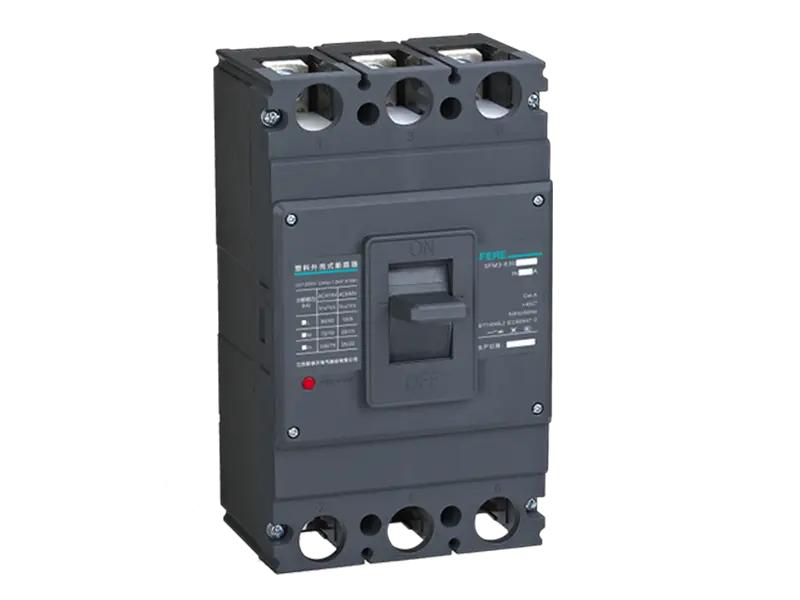
How Thermal Magnetic Trip MCCBs Work
A thermal magnetic trip MCCB combines a thermal element for overload protection with a magnetic element for rapid short-circuit protection. The two mechanisms respond differently because overloads and short circuits create very different electrical conditions.
During an overload, current exceeds the normal operating level but may not be high enough to require instantaneous disconnection. The thermal element responds to the heating effect of the current. As the overload continues, a bimetallic component bends until the breaker mechanism trips. This creates an inverse-time response: a higher overload generally results in faster tripping, while a smaller overload can be tolerated for a longer period.
This delay is important in practical electrical systems. Motors, transformers, and other equipment can draw temporary inrush current during normal operation. An appropriate time-current characteristic allows these short-duration conditions to occur without unnecessarily disconnecting the circuit.
A short circuit is different because fault current can rise extremely quickly. The magnetic element responds to the strong magnetic field created by high current and operates the trip mechanism with little or no intentional delay. This rapid response helps interrupt severe fault current before additional damage occurs downstream.
Thermal magnetic protection is mechanically straightforward and widely used in low-voltage distribution. Depending on the MCCB design, some trip values may be fixed while others may offer a limited range of adjustment. For systems with relatively predictable loads and straightforward protection requirements, this combination can provide an effective balance between protection, simplicity, and cost.
Electronic Trip MCCBs and Their Protection Functions
An electronic trip MCCB uses current sensors and electronic processing to determine when a breaker should trip, allowing more flexible protection characteristics than a conventional thermal magnetic mechanism.
Instead of relying primarily on the physical heating of a bimetal element, an electronic trip unit monitors current and compares measured conditions with programmed protection settings. When the measured condition exceeds the applicable threshold for the specified period, the trip unit activates the breaker mechanism.
Depending on the breaker and trip-unit design, electronic MCCBs may provide several protection functions. Long-time protection is generally used for overload conditions, while short-time protection can help manage higher fault currents with a controlled delay. Instantaneous protection responds to severe short circuits without intentional delay. Some electronic trip units can also provide ground-fault protection.
The availability of these functions varies by manufacturer and product series. Electronic trip should therefore not be interpreted as meaning that every MCCB automatically includes every protection, metering, or communication function.
One of the main advantages of electronic protection is setting flexibility. Engineers can often adjust pickup levels and time delays more precisely, which can be useful when coordinating an upstream breaker with downstream protection devices. In a larger distribution network, this flexibility may help isolate a fault closer to its source rather than disconnecting a much larger portion of the electrical system.
Some advanced electronic breakers can additionally provide status information, metering, or communication capabilities. These features are product-dependent and should be confirmed from the manufacturer's technical documentation rather than assumed from the term "electronic trip."
Thermal Magnetic vs Electronic Trip MCCB: Key Differences
The main difference between thermal magnetic and electronic trip MCCBs is how fault current is detected and how much control the user has over the protection curve. Thermal magnetic designs emphasize mechanical simplicity, while electronic trip systems generally provide greater adjustment flexibility.
| Comparison Factor | Thermal Magnetic Trip MCCB | Electronic Trip MCCB |
|---|---|---|
| Overload Detection | Thermal element responds to sustained overcurrent | Current sensors and electronic logic evaluate overload conditions |
| Short-Circuit Protection | Magnetic mechanism provides rapid tripping | Electronic logic provides instantaneous and, on applicable models, short-time protection |
| Setting Flexibility | Fixed or limited adjustment depending on model | Generally offers wider and more precise adjustment options |
| Protection Coordination | Suitable for many conventional distribution systems | Better suited to applications requiring detailed time-current coordination |
| Ground-Fault Protection | Usually requires additional protection depending on system design | Available in certain electronic trip configurations |
| Metering and Diagnostics | Typically limited at the trip-unit level | May be available on advanced models |
| System Complexity | Relatively simple | More sophisticated settings and configuration |
| Relative Cost | Generally lower for comparable basic applications | Generally higher due to additional electronics and functionality |
| Typical Use | Standard feeders, distribution panels, motors, and general equipment protection | Complex distribution systems, critical loads, and applications requiring precise coordination |
The comparison should not be reduced to "basic versus advanced." A more sophisticated trip unit does not automatically improve a system if its additional functions are unnecessary or incorrectly configured. Likewise, a thermal magnetic MCCB should not be considered inadequate simply because it has fewer adjustable parameters.
The correct decision depends on the protection study, load behavior, upstream and downstream devices, available fault current, and operational requirements of the installation.
Typical Applications for Each MCCB Trip Type
Thermal magnetic MCCBs generally fit applications with stable and well-understood protection requirements, while electronic trip MCCBs become more useful as distribution systems require greater selectivity and setting flexibility.
Applications for Thermal Magnetic Trip MCCBs
Thermal magnetic MCCBs are widely applicable to conventional low-voltage power distribution. They can be used for feeder protection, industrial equipment, distribution panels, and motor-related applications when the trip characteristics match the load and conductor requirements.
For a factory distribution panel with clearly defined feeder currents and no complex selective-coordination requirement, for example, a properly selected thermal magnetic MCCB may provide all the required overload and short-circuit protection without introducing unnecessary configuration complexity.
Motor circuits are another common consideration. Motors can draw significant current during startup, so the breaker characteristic must distinguish normal starting current from an actual fault. This makes coordination among the MCCB, motor starter, overload protection, and downstream equipment important.
Applications for Electronic Trip MCCBs
Electronic trip MCCBs are particularly useful where multiple protection devices must operate selectively. Industrial plants, larger commercial distribution systems, critical facilities, and complex switchboards may require closer coordination between upstream and downstream breakers.
For example, when a fault occurs on one downstream feeder, the protection strategy may be designed so that the downstream breaker operates first while the upstream main breaker remains closed. Adjustable short-time and instantaneous characteristics can give engineers more options when developing this type of coordination.
Electronic protection can also be valuable where operating conditions may change over time. If a facility expects future load expansion or needs more detailed adjustment of protection thresholds, greater setting flexibility can simplify system engineering.
However, actual trip functions must always be checked model by model. Specifying an "electronic MCCB" without stating required long-time, short-time, instantaneous, or ground-fault functions is not sufficient for a technical RFQ.
Selecting the Right Trip Unit for Your Electrical System
The right MCCB trip unit should be selected from the electrical protection requirements of the system, including load characteristics, conductor protection, available fault current, and coordination with other protective devices.
Start with the load rather than the trip technology. Engineers should establish the normal operating current, temporary inrush characteristics, and the allowable current capacity of conductors and connected equipment. A breaker must protect these components without creating unnecessary nuisance trips during expected operating conditions.
Next, consider short-circuit conditions and breaker coordination. The MCCB must have an appropriate rated breaking capacity for the prospective fault current at its installation point. Trip settings should also be coordinated with upstream and downstream devices when selective operation is required.
If the application requires relatively straightforward overload and short-circuit protection, a thermal magnetic MCCB may be the more practical choice. If the system requires adjustable long-time and short-time behavior, more detailed protection coordination, or additional electronic functions, an electronic trip MCCB may offer greater engineering flexibility.
Operating environment should also be considered. Temperature conditions can influence thermal protection behavior, while electronic equipment must be used within the environmental limits specified by its manufacturer. Installation method, number of poles, accessories, operating mechanism, and maintenance requirements should therefore be evaluated together with the trip unit.
When comparing molded case circuit breaker manufacturers, buyers should look beyond rated current alone. The RFQ should clearly specify system voltage, number of poles, required breaking capacity, load type, trip characteristics, installation conditions, and accessory requirements. Providing these parameters helps the manufacturer recommend an MCCB that matches the actual protection requirements of the electrical system.
Different molded case circuit breaker manufacturers may offer different frame sizes, breaking-capacity levels, trip configurations, operating mechanisms, and accessory options. For this reason, products should be compared according to the actual electrical design and required protection performance rather than price or ampere rating alone.
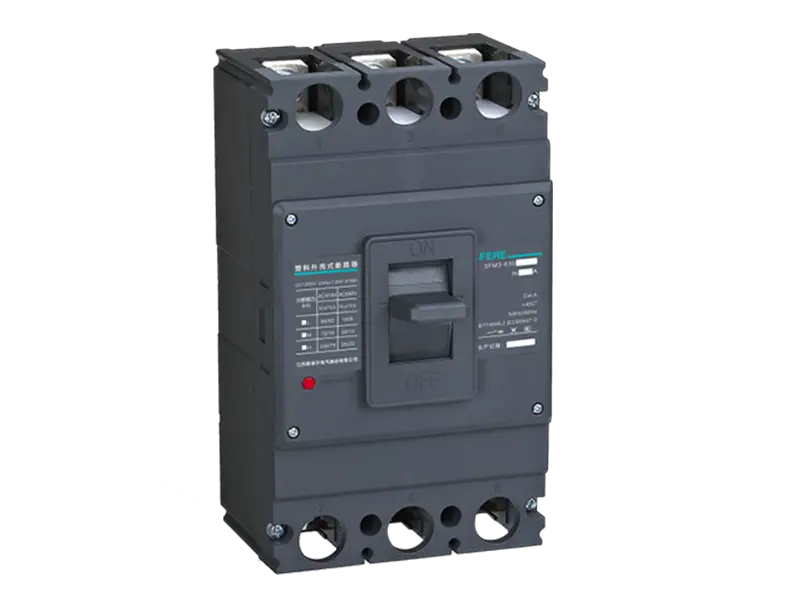
Elecnova's current SFM3 molded case circuit breaker range is designed for overload and short-circuit protection in low-voltage distribution and motor-related applications. Its published model selection information includes electromagnetic-only and thermal-electromagnetic trip configurations, together with different pole, breaking-capacity, and accessory options. Buyers planning a complete protection system can review Elecnova's broader electrical products and power distribution solutions when matching breakers with other monitoring and distribution equipment.
For a project-specific selection, especially where rated current, fault level, motor protection, or coordination requirements need to be confirmed, you can contact Elecnova with the electrical system specifications for further technical discussion.
Conclusion
Thermal magnetic and electronic trip MCCBs are designed to achieve the same fundamental objective: protecting electrical circuits and equipment from abnormal current conditions. The difference lies primarily in how those conditions are detected and how much flexibility is available when configuring the protection response.
Thermal magnetic MCCBs provide a practical combination of time-delayed overload protection and rapid magnetic short-circuit protection. They are well suited to many conventional distribution and equipment-protection applications. Electronic trip MCCBs use sensing and electronic processing to provide more adjustable protection characteristics and can be advantageous in systems requiring detailed selective coordination or additional protection functions.
For this reason, the best MCCB trip type is not determined by which technology is more advanced. It should be determined by the load characteristics, fault-current conditions, protection study, coordination requirements, and operational needs of the electrical system. Selecting from these parameters helps achieve reliable protection without adding unnecessary cost or complexity.
Frequently Asked Questions About Thermal Magnetic and Electronic Trip MCCBs
1. What is a thermal magnetic trip MCCB?
A thermal magnetic MCCB uses a thermal element for overload protection and a magnetic mechanism for rapid short-circuit protection.
2. What is an electronic trip MCCB?
An electronic trip MCCB uses current sensing and electronic logic to monitor fault conditions and activate the breaker according to its configured protection settings.
3. Is an electronic trip MCCB always better than a thermal magnetic MCCB?
No. Electronic trip units provide greater setting flexibility, but thermal magnetic MCCBs may be more practical for straightforward applications that do not require advanced coordination or additional protection functions.
4. Can a thermal magnetic MCCB protect against both overload and short circuit?
Yes. The thermal element provides overload protection, while the magnetic element responds rapidly to high short-circuit current.
5. What protection functions can an electronic trip MCCB provide?
Depending on the model, an electronic trip unit may provide long-time, short-time, instantaneous, and ground-fault protection. Available functions should always be confirmed from the product specification.
6. What information should be provided when selecting an MCCB?
Specify the system voltage, rated current, number of poles, prospective fault current, required breaking capacity, load type, trip-function requirements, installation conditions, and any required accessories.