Choosing the right energy meter for an EV charging station requires more than checking whether the device can measure electricity consumption. The meter must match the charging architecture, electrical ratings, billing requirements, communication system, installation method and operating environment of the charger.
For EV charger manufacturers, charging station integrators and infrastructure operators, selecting the wrong meter can create problems ranging from inaccurate billing and communication incompatibility to difficult installation and limited system integration. A suitable electric meter for EV charger applications should therefore be selected as part of the charging system design rather than treated as an isolated component.
The following guide explains the five main factors to evaluate before selecting an energy meter for an EV charging station.
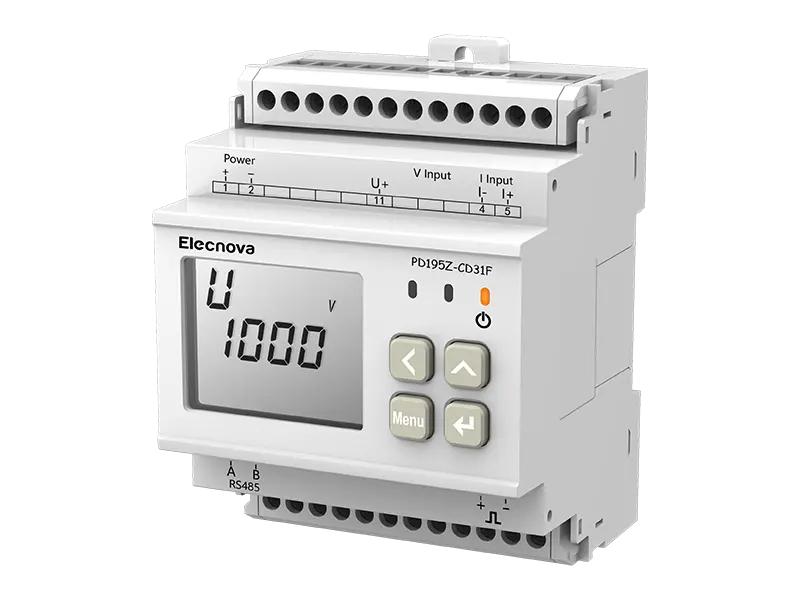
Should You Choose an AC or DC Energy Meter for Your EV Charger?
The first step in selecting an EV charging meter is determining whether the meter will measure AC-side or DC-side energy. An AC energy meter measures alternating-current electrical parameters, while a DC energy meter is designed for the direct-current section of a charging system.
For an AC charging station, the vehicle normally receives AC power and its onboard charger converts that power to DC for the battery. In this type of application, an AC energy meter can be installed within the charging equipment to measure voltage, current, power and accumulated energy.
DC fast chargers work differently. The charger converts AC power into DC before delivering electricity to the vehicle battery. When measurement is required on the charger output side, the metering device must therefore be suitable for DC voltage and current measurement.
This distinction is important because AC and DC meters use different measurement architectures and must be selected according to their intended electrical circuits. Installing a meter simply because its current range appears suitable is not enough.
| Selection Factor | AC Energy Meter | DC Energy Meter |
|---|
| Typical Application | AC EV charger or AC charging pile | DC charger or DC fast charging system |
| Measured Power | Alternating current | Direct current |
| Typical Parameters | Voltage, current, active power, reactive power, power factor, frequency and energy | DC voltage, current, power and energy |
| Phase Selection | Single-phase or three-phase | Not based on AC phase configuration |
| Communication | May include RS485 and Modbus communication | May include RS485 and Modbus communication |
| Main Selection Question | Does the meter match the AC charger voltage, phase and current? | Does the meter match the DC output voltage and current measurement method? |
Elecnova provides both AC and DC metering solutions for EV charging applications. Its AC range includes single-phase and three-phase DIN-rail meters, while the DC range is designed for DC charger measurement. Buyers comparing different charging architectures can also review Elecnova's broader power monitoring and measurement products when planning the complete electrical monitoring system.
What Metering Accuracy and Certifications Are Required for EV Charging?
Metering accuracy and certification should be selected according to how the charging data will be used, especially when energy measurements are connected to commercial billing.
An EV charger may use metering data for several different purposes. In a basic monitoring application, the operator may only need reliable information about energy consumption and charger performance. In a commercial charging application, however, measured energy may also be used to calculate customer charges. In such cases, the applicable legal metrology requirements of the target market should be checked before the meter is specified.
For projects in markets where the Measuring Instruments Directive, commonly known as MID, applies to the intended metering and billing arrangement, buyers should determine whether a MID-certified meter is required. Requirements can vary by country, charging scenario and commercial model, so charger manufacturers should confirm local regulations rather than assume that one certification applies globally.
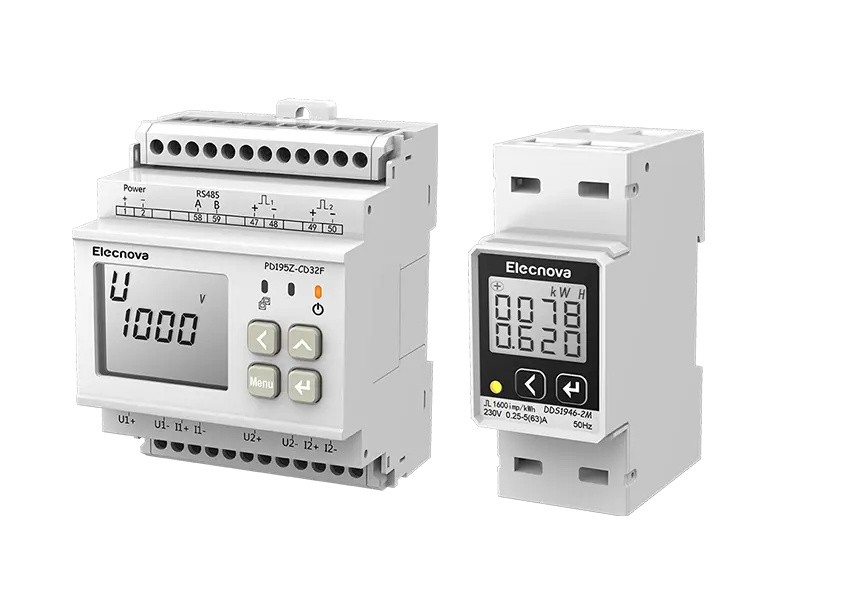
Accuracy class is another important specification. For example, Elecnova's DDSF1946-2M single-phase AC energy meter is specified with Class B active energy accuracy and MID certification. The model also supports bidirectional energy measurement, tariff energy, RS485 communication and Modbus-RTU communication, making it suitable for EV charging and remote power monitoring applications.
Certification should therefore be evaluated together with the actual application. A technically accurate meter may still be unsuitable for a project if it does not carry the certification required by the destination market or billing system.
When preparing a specification, buyers should clearly identify the target country, whether the meter will be used for billing, the required accuracy class and any mandatory electrical or metrology certifications. This information allows the supplier to recommend a meter that fits both the technical and regulatory requirements.
How Do Voltage, Current, and Phase Affect Energy Meter Selection?
An EV charger energy meter must be electrically compatible with the charger's voltage, current and phase configuration under normal operating conditions. These parameters should be confirmed before the meter model is selected.
Voltage
The rated voltage of the meter must correspond to the electrical system in which it will operate. For AC charging, the required voltage depends on the supply configuration and regional electrical system. For DC charging, the meter must be designed for the charger's DC voltage range.
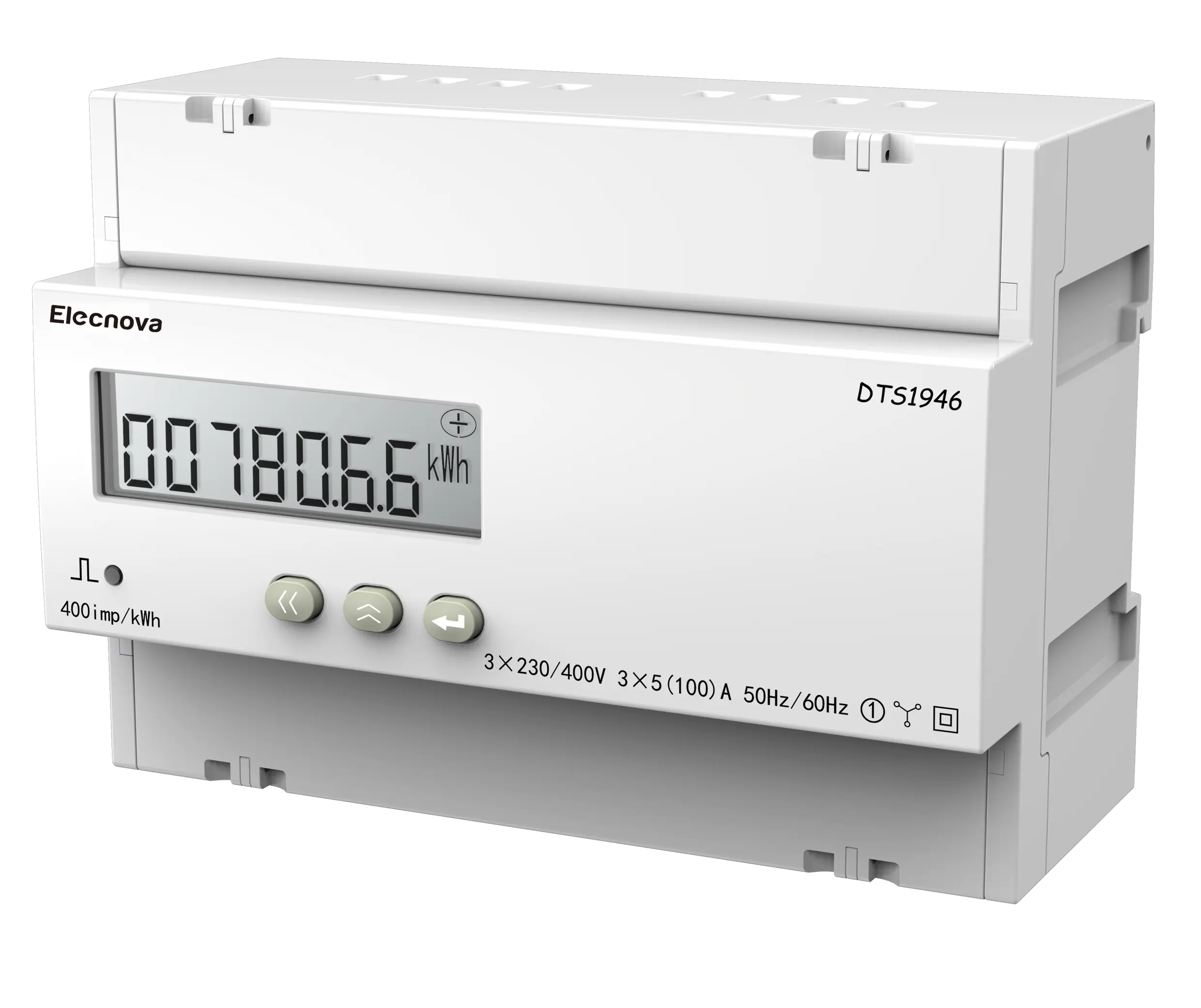
For example, Elecnova's DDSF1946-2M single-phase EV charging meter is specified for 230 V applications. The DTSF1946-4M-01 three-phase model is designed for a 3 × 230/400 V system. These examples illustrate why the charger architecture should be defined before choosing the meter.
Current
The expected charger current determines both the required current range and the appropriate measurement method. Some applications use direct-connected meters, while higher-current systems may require an external current measurement device such as a current transformer or shunt, depending on whether the system is AC or DC.
Elecnova's referenced single-phase and three-phase AC EV charger meters use direct current input with a specified range of 0.25-5(63) A. This does not mean that the same range should be selected for every charger. The meter must always be sized according to the electrical design and maximum operating conditions of the specific charging equipment.
Single-Phase or Three-Phase
For AC chargers, phase configuration is a fundamental selection criterion. A single-phase charger requires a meter designed for the corresponding single-phase wiring arrangement, while a three-phase charging system requires three-phase measurement.
A three-phase meter must correctly measure the electrical parameters across the complete three-phase system rather than simply measure one conductor. Depending on the meter functions, this can include phase voltage, current, active and reactive power, frequency, power factor and accumulated energy.
When requesting a quotation, EV charger manufacturers should provide the supplier with the nominal voltage, number of phases, maximum current and preferred current measurement method. These four pieces of information eliminate many common meter-selection errors at an early stage.
Which Communication Interfaces Should an EV Charger Energy Meter Support?
An EV charging meter should support communication that is compatible with the charger controller, gateway or energy management platform that needs to receive its measurement data.
Modern charging infrastructure relies on more than local energy readings. Charging controllers and backend systems may need real-time or periodic access to voltage, current, power, accumulated energy and other electrical data. The meter's communication interface and protocol therefore affect how easily it can be integrated into the complete charging system.
RS485 is widely used for wired communication between industrial electrical devices because it is suitable for equipment-level communication and multi-device networks. Modbus RTU is also commonly used as the communication protocol over an RS485 network.
For example, Elecnova's DDSF1946-2M single-phase meter supports an RS485 interface with Modbus-RTU communication. Its three-phase EV charging meter also supports RS485 communication, with Modbus RTU or DL/T645-2007 communication options. According to Elecnova's published technical data, the referenced AC models support communication baud rates up to 9600 bps.
Communication selection should nevertheless begin with the charger's control architecture. The charger manufacturer should confirm which protocol the controller supports, which measurement registers are required, how frequently data will be collected and whether multiple meters will share the same communication bus.
It is also useful to distinguish meter communication from charger-to-cloud communication. An energy meter may communicate locally with the charger controller through RS485 and Modbus, while the charger itself uses another protocol or network connection to communicate with a charging management platform. These are different layers of the system and should not be treated as interchangeable.
What Should You Check Before Selecting an Energy Meter for an EV Charging Station?
Before selecting an energy meter, confirm the electrical architecture, measurement purpose, regulatory requirements, communication method, installation space and environmental conditions of the charging station.
A useful meter specification should describe the actual charging system rather than simply request an "EV charger meter." Providing complete project information allows manufacturers to identify technical mismatches before samples are ordered or a charger design enters mass production.
| Item to Confirm | Information to Provide | Why It Matters |
|---|
| Charging Type | AC or DC | Determines the fundamental meter architecture |
| Phase | Single-phase or three-phase for AC applications | Determines wiring and measurement configuration |
| Rated Voltage | Nominal and expected operating voltage | Ensures electrical compatibility |
| Maximum Current | Normal and maximum charging current | Determines current range and measurement method |
| Measurement Purpose | Monitoring, energy management or commercial billing | Affects accuracy and certification requirements |
| Certification | MID or other applicable local requirements | May be necessary for the intended market and use |
| Communication | RS485, Modbus RTU or another required interface/protocol | Ensures integration with the charger controller |
| Installation | DIN-rail space, dimensions and enclosure conditions | Prevents mechanical integration problems |
| Operating Environment | Temperature, humidity and enclosure conditions | Helps ensure reliable field operation |
DIN-rail dimensions can be particularly important for EV charger manufacturers working with compact enclosures. Meter width, terminal position and wiring clearance should be considered during charger layout design rather than after the enclosure has already been finalized.
Environmental specifications also deserve attention. Chargers may operate outdoors or in locations exposed to substantial temperature variation, so the meter's rated operating temperature and protection conditions should be compared with the actual installation environment. Elecnova's EV charger meter documentation, for example, specifies operating temperature ranges down to -40°C and up to +70°C for referenced models, but the exact specification should always be confirmed for the selected meter.
For OEM projects or charging station development, it is helpful to send the supplier a basic electrical diagram together with the required voltage, current, phase, accuracy, communication and certification information. This gives the meter manufacturer enough context to evaluate compatibility instead of recommending a product based only on charger power.
Elecnova develops AC and DC EV charging energy meters as part of its wider power measurement and monitoring portfolio. If your project has specific metering, certification or communication requirements, you can contact Elecnova with the charger specifications for model selection and technical discussion.
Conclusion
Selecting an energy meter for an EV charging station starts with understanding where and how electricity needs to be measured. AC chargers require a meter that matches the correct single-phase or three-phase electrical system, while DC chargers require dedicated DC measurement. Accuracy and certification become especially important when measured energy is used for commercial billing.
Voltage range, maximum current, communication protocol, installation dimensions and environmental conditions should then be checked against the actual charger design. For connected charging infrastructure, RS485 and Modbus compatibility can also play an important role in integrating the meter with the charger controller and energy management system.
Rather than selecting an electric meter for EV charger applications based on a single specification, evaluate the complete combination of electrical compatibility, metering accuracy, certification, communication and installation requirements. This approach reduces integration risks and makes it easier to build a reliable metering architecture for both AC and DC charging stations.
Frequently Asked Questions About EV Charger Energy Meters
1. What does an energy meter measure in an EV charging station?
An EV charging energy meter can measure parameters such as voltage, current, power and accumulated electrical energy. Depending on the model, it may also measure power factor, frequency, reactive energy and other electrical parameters.
2. Do AC and DC EV chargers use the same energy meter?
No. AC and DC charging systems require meters designed for their respective electrical circuits. Meter type should match the point in the charging system where energy is being measured.
3. Is MID certification required for every EV charger meter?
Not necessarily. The requirement depends on the destination market, billing application and applicable metrology regulations. Project-specific regulatory requirements should be confirmed before meter selection.
4. What is the difference between a single-phase and three-phase EV charger meter?
A single-phase meter measures a single-phase AC charging circuit, while a three-phase meter measures a three-phase system. The meter must match the charger's actual electrical configuration.
5. Why is RS485 communication used in EV charger energy meters?
RS485 allows the energy meter to transmit measurement data to a charger controller, gateway or monitoring system. It is often used together with industrial protocols such as Modbus RTU.
6. What information should I provide when sourcing an electric meter for EV charger projects?
Provide the charging type, phase configuration, rated voltage, maximum current, required accuracy, certification requirements, communication protocol, installation dimensions and expected operating environment.



 CN
CN EN
EN
 fr
fr  de
de  es
es  it
it  ru
ru  ar
ar  vi
vi  tr
tr  th
th