




 CN
CN EN
EN
 fr
fr  de
de  es
es  it
it  ru
ru  ar
ar  vi
vi  tr
tr  th
th Multi-circuit monitoring solves this visibility gap by collecting electrical data from multiple circuits within the same distribution system. A multi-circuit monitor can centralize measurements from several branch circuits, allowing operators to understand where electricity is being used, how circuit loads change over time, and where abnormal operating conditions may be developing.
For panel builders, facility operators, energy managers, and electrical system integrators, this approach can be more practical than installing and managing separate monitoring devices for every individual feeder. The following sections explain how multi-circuit monitoring works, what parameters should be measured, how the system is structured, and what to consider when selecting monitoring equipment for a commercial or industrial panel.
How a Multi-Circuit Monitoring System Collects Electrical Data
A multi-circuit monitoring system collects electrical measurements from multiple branch circuits and brings the data into a centralized monitoring architecture for display, communication, or further analysis.
In a typical low-voltage distribution panel, the monitoring system needs electrical signals from the circuits being measured. Current is commonly detected through current transformers or compatible current sensors installed on the relevant conductors. Voltage signals are also supplied to the measurement system when voltage, power, energy, power factor, or other calculated electrical parameters are required.
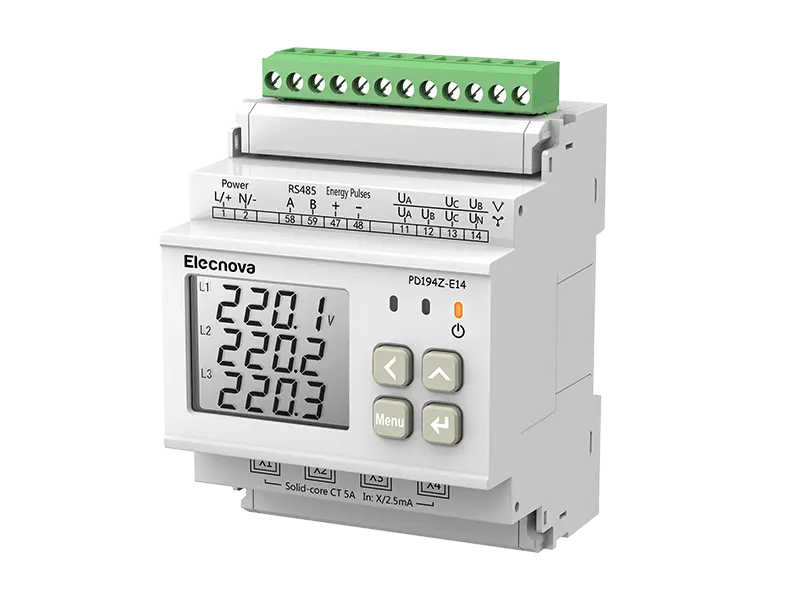
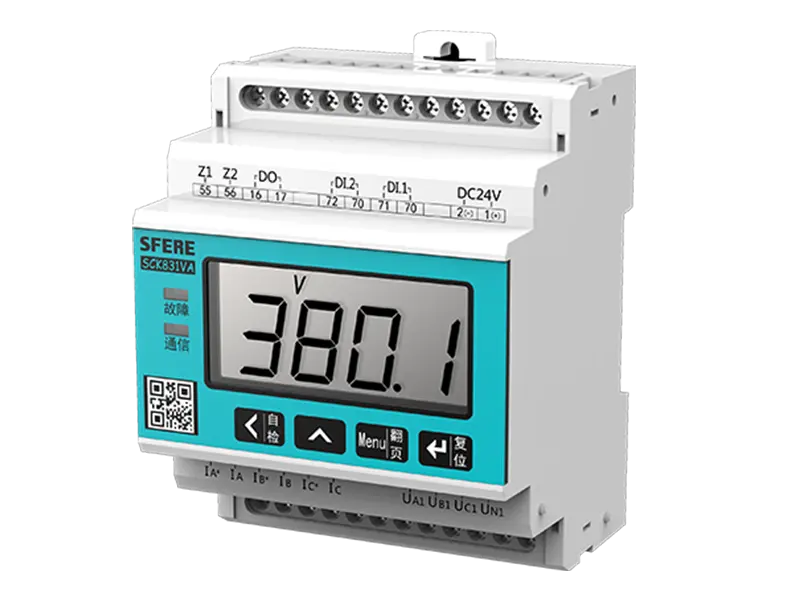
The measurement module processes these input signals and converts them into usable electrical data. Instead of requiring one completely independent meter and display for every branch circuit, a modular multi-circuit monitor can collect measurements from multiple channels and organize them through a shared display, communication module, or monitoring platform.
This architecture is particularly useful in panels containing a large number of outgoing feeders. The monitoring system can provide a centralized view while the actual measurement points remain distributed across individual circuits.
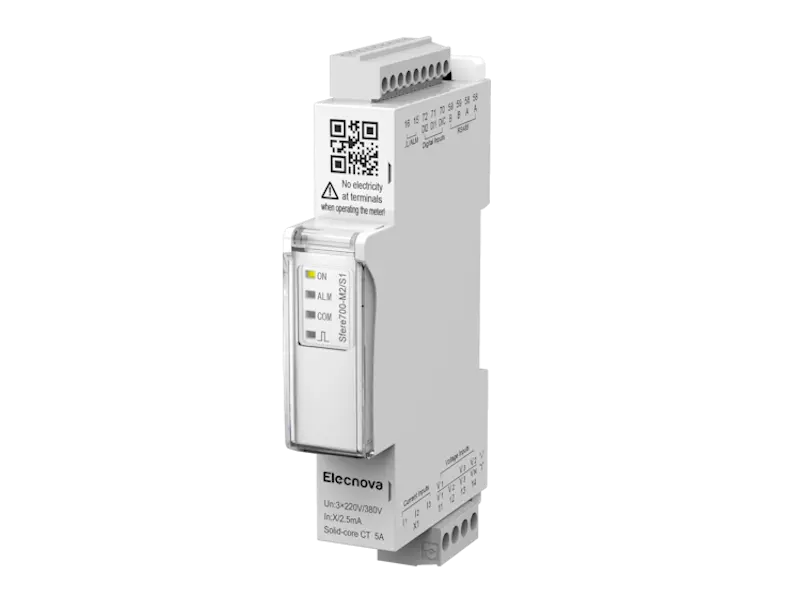
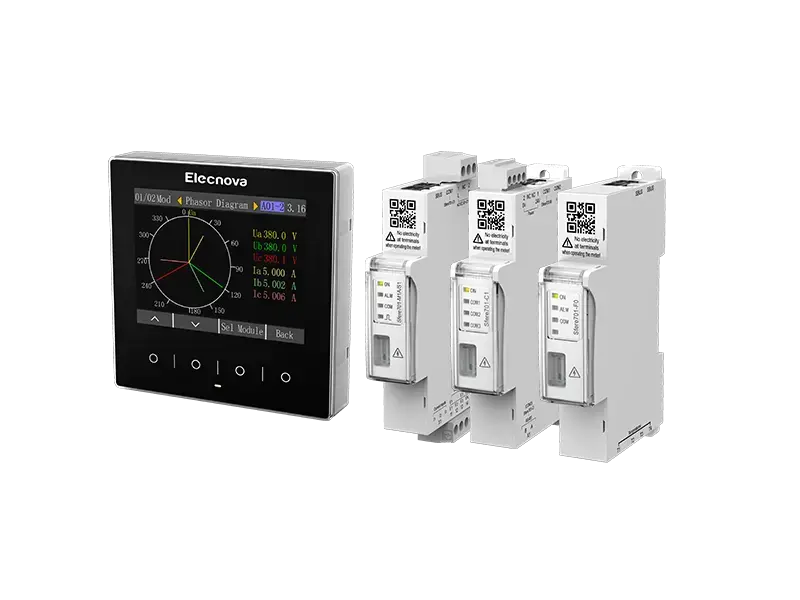
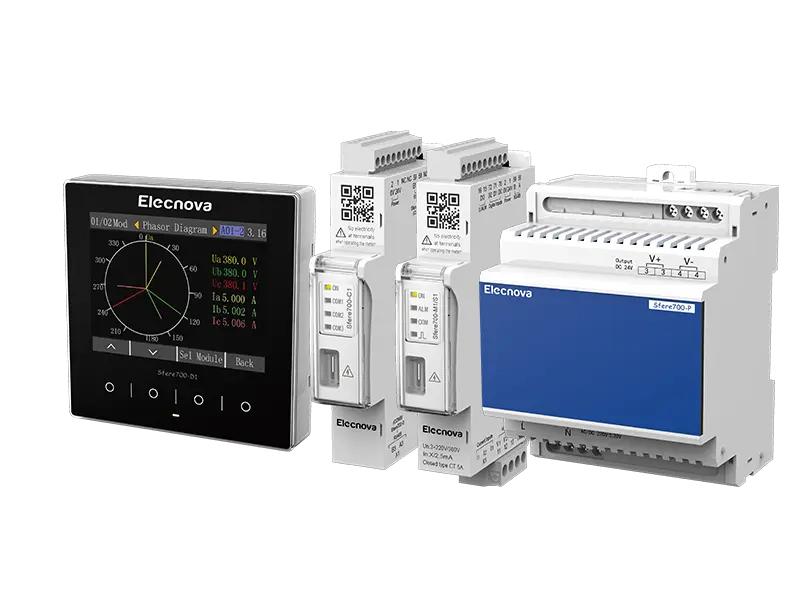
For example, Elecnova's Sfere700 electrical measurement system uses a modular architecture consisting of display, communication, power, measurement, and current transformer components. According to Elecnova's published specifications, the system can be configured with up to 32 Sfere700-M monitoring modules and can measure the power parameters of up to 32 three-phase circuits.
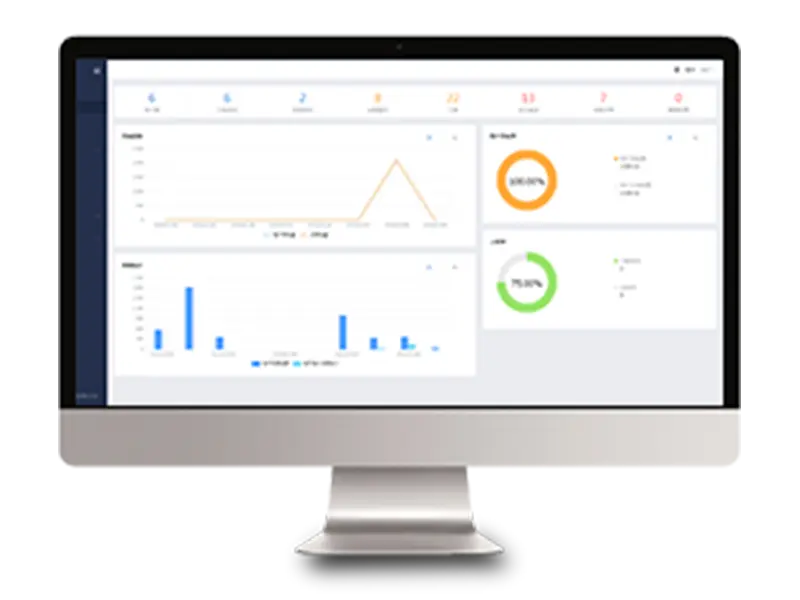
Once the electrical data has been measured, it can be displayed locally or transferred through the communication layer for centralized supervision. This means the operator does not have to inspect every outgoing circuit manually to understand its electrical condition.
Key Parameters Monitored Across Multiple Circuits
A multi-circuit monitor typically measures the electrical parameters needed to evaluate circuit loading, energy consumption, and operating performance across multiple feeders.
Current is one of the most important measurements because it shows how heavily each circuit is loaded. Comparing current values across circuits can help operators identify highly loaded feeders, unusually low utilization, or major differences between similar loads.
Voltage measurement adds another layer of information. When voltage and current are measured together, the monitoring device can calculate additional parameters such as active power, reactive power, apparent power, and power factor, depending on the capabilities of the selected system.
Energy measurement is especially useful when individual circuits serve different production lines, tenants, departments, equipment groups, or functional areas. Instead of seeing only total facility consumption, operators can determine how much electricity is associated with different parts of the distribution system.
| Parameter | What It Shows | Why It Matters in Multi-Circuit Monitoring |
|---|---|---|
| Current | Electrical load on each monitored circuit | Helps identify heavily loaded or unusually lightly loaded feeders |
| Voltage | Voltage condition of the monitored electrical system | Supports evaluation of circuit operating conditions |
| Active Power | Power being consumed by the connected load | Helps compare real-time demand between circuits |
| Reactive Power | Reactive component of electrical power | Provides additional information about load characteristics |
| Power Factor | Relationship between active and apparent power | Helps identify circuits with different electrical load behavior |
| Energy Consumption | Accumulated electrical energy use | Supports circuit-level energy allocation and consumption analysis |
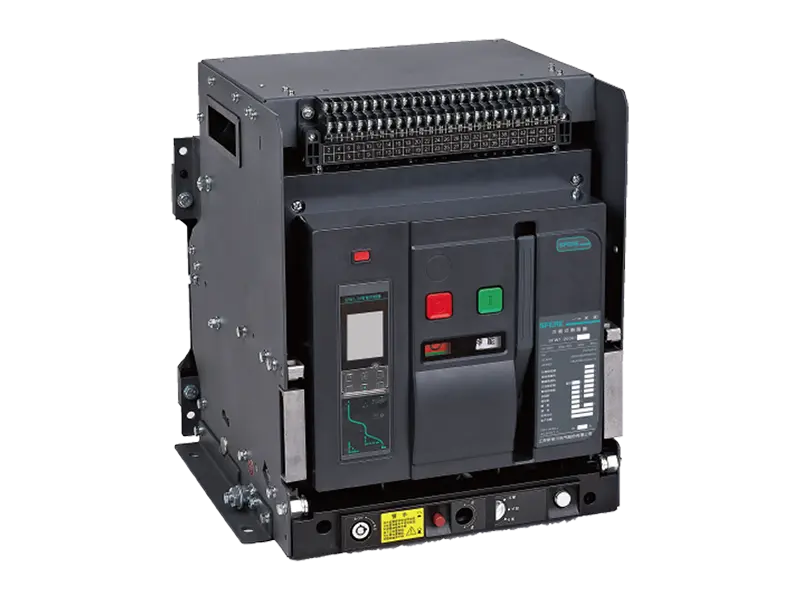
| Circuit Status | Operational or switching status when supported | Adds equipment-state information to electrical measurements |
The exact parameters available depend on the selected monitoring unit and system configuration. Buyers should therefore avoid assuming that every multi-circuit device provides the same measurement functions.
The appropriate measurement scope should be determined by the intended use. A facility focused primarily on energy allocation may prioritize current, power, and accumulated energy. A more detailed electrical monitoring project may also require power factor, power quality information, circuit status, alarms, or additional operating data.
Elecnova's multi-circuit monitoring product range is designed around real-time monitoring of parameters including voltage, current, power, energy consumption, and power factor across multiple circuits. This allows the monitoring architecture to support both operational visibility and energy management in commercial and industrial electrical systems.
Main Components of a Multi-Circuit Monitoring Setup
A multi-circuit monitoring setup generally combines sensing, measurement, communication, and visualization components so that data from many electrical circuits can be collected and managed as one system.
Current Sensors or Current Transformers
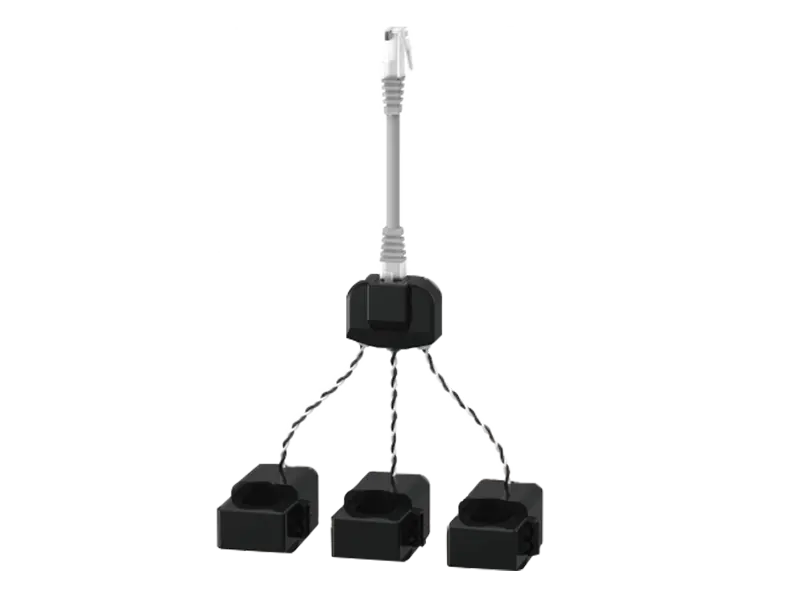
Current transformers, commonly called CTs, provide the measurement system with a proportional signal representing the current flowing through each monitored conductor. The CT type, rated primary current, accuracy, installation method, and compatibility with the monitoring module must match the application.
In retrofit projects, installation space can be especially important because existing panels may already contain densely arranged wiring and switching equipment. The physical dimensions of sensors and the way they are installed should therefore be considered before the monitoring hardware is selected.
Measurement Modules
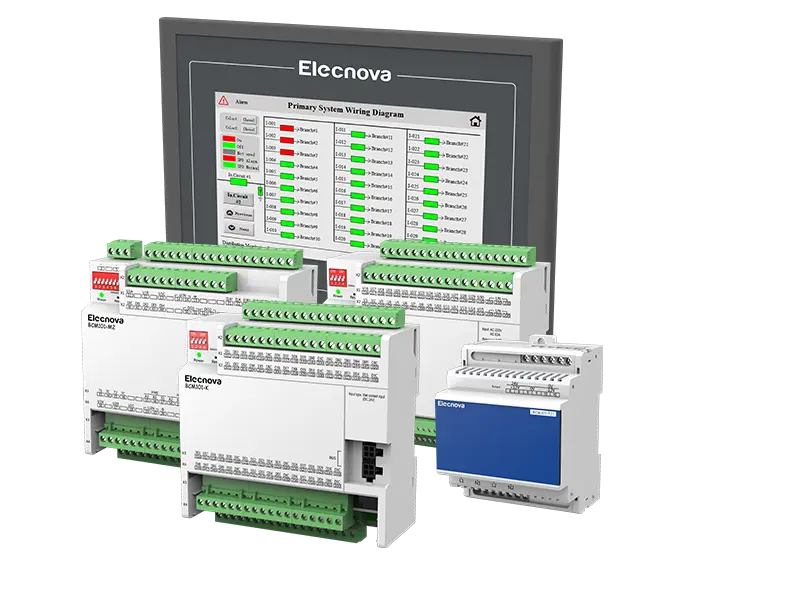
The measurement module receives electrical signals and calculates the required circuit parameters. In a modular system, multiple measurement modules can be connected together so that the monitoring capacity can be adapted to the number of circuits in the panel.
This modular approach can be useful in industrial switchboards or commercial distribution panels where the number of feeders is too large for a conventional single-circuit meter architecture.
Display and Local Interface
A centralized display allows operators to view data from multiple monitored circuits without installing a separate front-panel display for every feeder. Depending on system design, users may be able to switch between circuits, inspect electrical parameters, view alarms, and check equipment status from one interface.
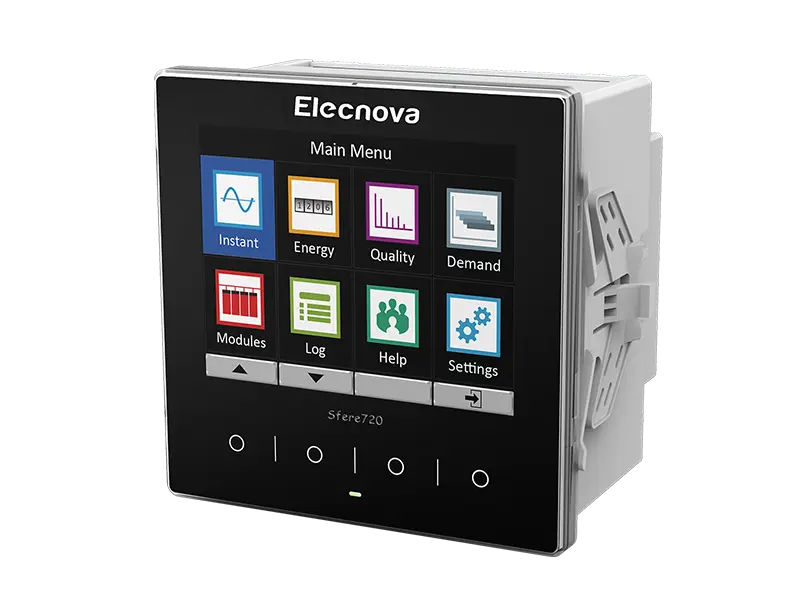
Elecnova's Sfere700 system, for example, includes a centralized color LCD display and is designed for multi-circuit measurement in low-voltage distribution systems. Its modular architecture is also intended for compact installation, including drawer-type switch cabinet applications.
Communication Module
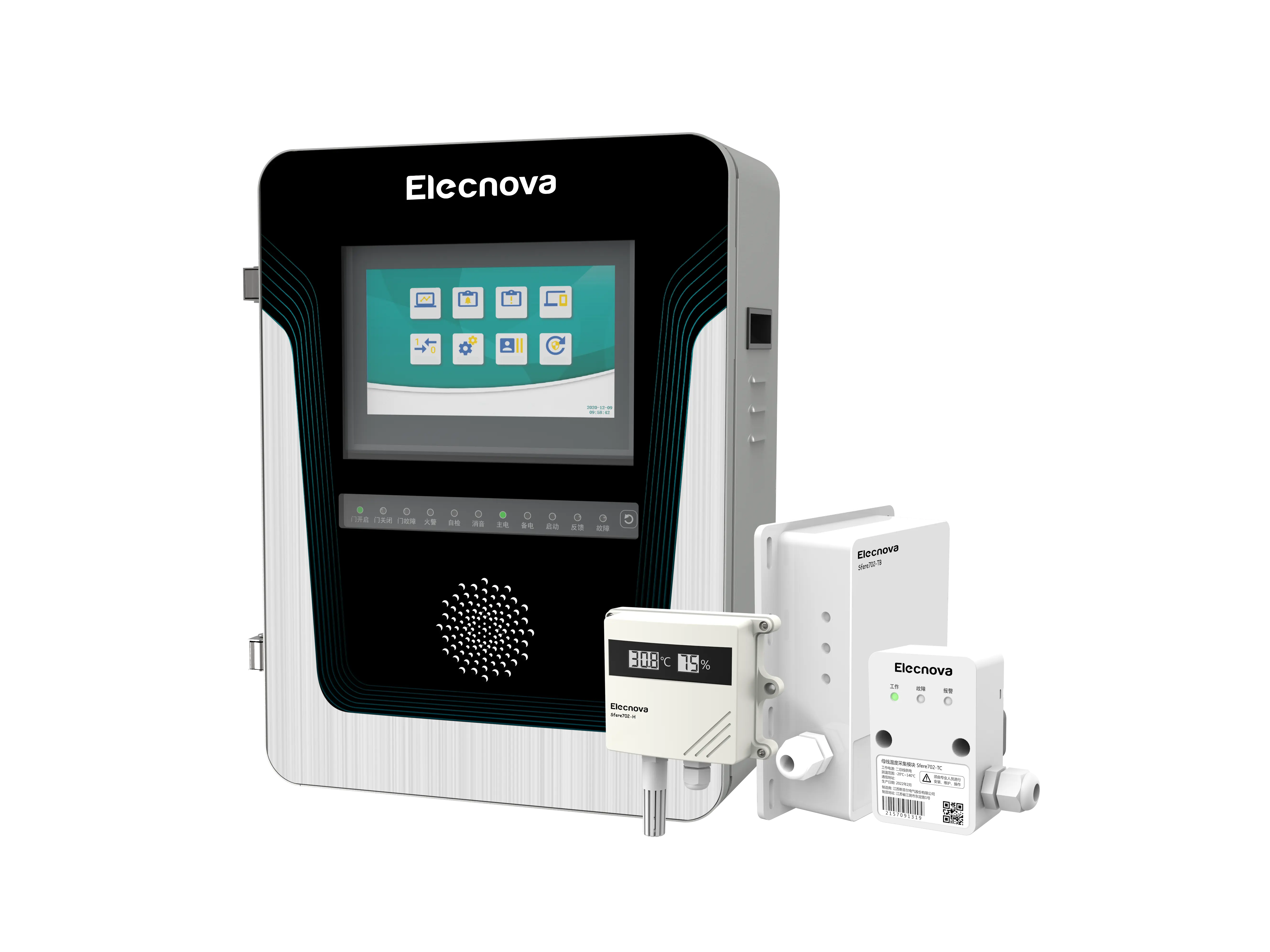
Local measurement is only one part of modern panel monitoring. When data needs to be transferred to a supervisory system, the communication module provides the connection between the electrical measurement equipment and higher-level software, gateways, or automation systems.
Before selecting equipment, system integrators should confirm which communication interface and protocol are required by the existing building management, energy management, SCADA, or power monitoring architecture. Compatibility should be verified at both the physical communication level and the protocol level.
How Multi-Circuit Monitoring Improves Panel Visibility and Load Management
Multi-circuit monitoring improves electrical panel visibility by showing how power and energy are distributed among individual feeders instead of limiting operators to total incoming measurements.
Consider a commercial building in which one main meter shows a sudden increase in overall electricity consumption. The incoming measurement confirms that demand has increased, but it cannot identify whether the additional load comes from HVAC equipment, lighting, elevators, EV charging, or another part of the building.
Circuit-level data makes that investigation more specific. By comparing individual feeders, facility teams can determine which circuit has changed and when the change occurred. Historical monitoring can then help determine whether the increase is a normal operating pattern, a scheduling issue, or an unexpected change that deserves further investigation.
The same principle applies in industrial facilities. Different circuits may supply production lines, motors, compressors, process equipment, auxiliary systems, or other loads. A multi-circuit monitor allows the facility to compare these loads within one monitoring architecture rather than treating the distribution panel as a single undifferentiated electrical load.
Load distribution is another important use case. If several circuits are intended to operate under similar conditions but one consistently carries a much greater load, the difference becomes easier to identify through circuit-level data. Engineers can then investigate the electrical design and actual operating conditions before deciding whether any redistribution or system modification is appropriate.
Multi-circuit monitoring can also support energy management. Circuit-level energy data can be grouped according to equipment, department, production area, tenant, or other operational categories. This provides more actionable information than total facility consumption alone and helps energy managers understand where energy-saving measures should be investigated.
For projects requiring broader power management, monitoring devices can form part of a larger measurement and control architecture. Elecnova provides power meters, monitoring units, current transformers, communication devices, and energy management products within its electrical measurement and monitoring product portfolio, allowing different layers of the system to be planned together.
What to Consider When Selecting a Multi-Circuit Monitor
Selecting a multi-circuit monitor requires matching the number of circuits, electrical system configuration, measurement requirements, sensor design, communication interface, installation space, and future expansion needs to the actual panel.
The first consideration is the number and type of circuits. Buyers should confirm not only how many feeders require monitoring today, but also whether additional circuits are likely to be added later. A modular system with expansion capacity may be more practical when the distribution architecture is expected to grow.
The electrical configuration must also be defined. Monitoring a three-phase industrial feeder is different from monitoring a single-phase commercial branch circuit or a DC circuit. Voltage level, current range, phase configuration, and sensor arrangement should therefore be documented before equipment is selected.
Measurement requirements are equally important. If the objective is basic load monitoring, current measurement may be central to the application. If the project also requires energy allocation or detailed electrical analysis, the monitoring system may need voltage, power, energy, power factor, alarm, and status functions.
Panel space should not be overlooked. One of the advantages of centralized multi-circuit architectures is the possibility of reducing the number of separate front-panel meters and consolidating monitoring functions. However, measurement modules, CTs, communication hardware, wiring, and display equipment still need to fit within the available cabinet space.
Communication should be specified before procurement rather than treated as an afterthought. The selected system should be compatible with the site's existing monitoring architecture and provide the data required by the higher-level platform. If remote or centralized monitoring is planned, integrators should also determine how many devices will communicate on the network and how the electrical data will be organized.
A comparison between individual metering and centralized multi-circuit monitoring can help determine which architecture better suits the project:
| Selection Factor | Individual Circuit Meters | Multi-Circuit Monitoring System |
|---|---|---|
| Monitoring Architecture | Separate meter for each circuit | Multiple circuits managed through a centralized architecture |
| Panel Components | More individual meter devices and displays may be required | Measurement can be consolidated through shared modules and display |
| Centralized Visibility | Data may be distributed across multiple devices | Designed for centralized multi-circuit visibility |
| Expansion | Additional circuits generally require additional meters | Modular systems may allow additional monitoring channels |
| Best Fit | Small systems with a limited number of separately monitored circuits | Panels with many branch circuits or centralized monitoring requirements |
For B2B procurement, it is useful to provide the supplier with a single-line diagram or panel architecture together with the number of monitored circuits, phase configuration, voltage, current range, required parameters, CT requirements, communication method, and available installation space.
Elecnova develops modular multi-circuit monitoring equipment for commercial and industrial power distribution applications. For projects involving a new distribution panel, switchboard upgrade, or centralized monitoring system, you can contact Elecnova with the panel specifications to discuss a suitable monitoring configuration.
Conclusion
Multi-circuit monitoring gives commercial and industrial facilities a more detailed view of how electricity moves through a distribution panel. Instead of relying only on total incoming measurements, operators can monitor individual feeders and compare electrical conditions across multiple circuits.
A typical system combines current sensing, electrical measurement modules, centralized display, and communication components. Depending on the selected equipment, the system can provide information such as voltage, current, power, energy consumption, power factor, circuit status, and alarms.
The right multi-circuit monitor should therefore be selected according to the actual panel architecture rather than simply by the maximum number of available channels. Circuit quantity, electrical configuration, required parameters, sensor compatibility, communication, available space, and future expansion should all be evaluated together.
When these factors are properly matched, multi-circuit monitoring can provide the circuit-level visibility needed for more effective load analysis, energy management, troubleshooting, and electrical system operation in commercial and industrial facilities.
Frequently Asked Questions About Multi-Circuit Monitoring
1. What is a multi-circuit monitor?
A multi-circuit monitor is a measurement system designed to collect electrical data from multiple circuits within one centralized monitoring architecture. Depending on the system, it can measure current, voltage, power, energy, power factor, and other electrical parameters.
2. Why use multi-circuit monitoring instead of one main power meter?
A main meter shows total electrical usage, while multi-circuit monitoring shows how that load is distributed among individual feeders. This provides more detailed information for load analysis and energy management.
3. How many circuits can a multi-circuit monitoring system measure?
Capacity depends on the product and system architecture. For example, Elecnova's Sfere700 system can be configured to measure power parameters for up to 32 three-phase circuits.
4. What electrical parameters can a multi-circuit monitor measure?
Depending on the device, measurements can include voltage, current, active power, reactive power, energy consumption, power factor, and circuit status.
5. Where is multi-circuit monitoring commonly used?
Typical applications include commercial buildings, industrial plants, data centers, switchboards, distribution cabinets, and other facilities that need centralized visibility across multiple electrical feeders.
6. What information should I provide when selecting a multi-circuit monitor?
Provide the number of circuits, phase configuration, system voltage, current range, required measurement parameters, CT requirements, communication interface, panel space, and any planned future expansion.